
IT for operating businesses
Write the picture first. Then put the work in order.
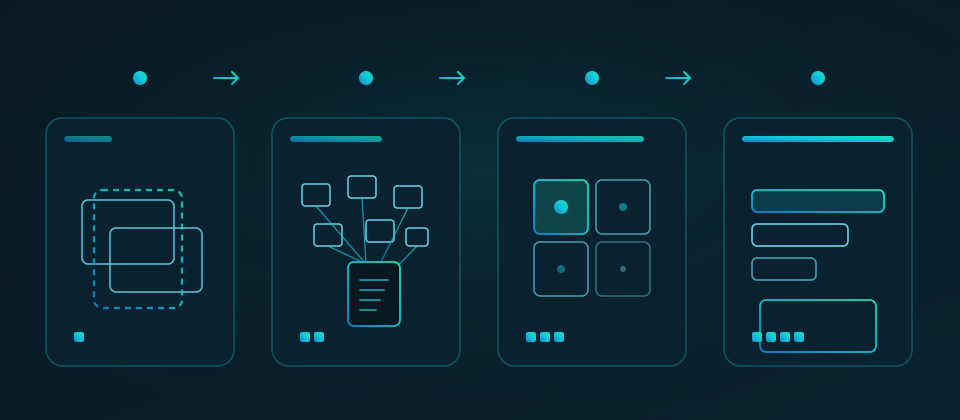

This page is the method for the paid IT assessment and roadmap (offer A). Implementation, support and procurement are later, separate proposals. The job is to turn a broad or partly defined IT need into a plan that can be measured, ranked and bought.
The reasoning for the paid assessment is in Why the paid assessment comes first.
Phase titles follow the proposal template. Deliverables are a current-state summary, a risk and priority matrix, a 90-day / 6-month / 12-month roadmap, and a management presentation. The assessment fee does not include hardware sourcing, installation, transfer or cutover, third-party licences, or ongoing operational support (no retainer inside this fee). Unless the proposal says otherwise, those are later phases.
Work often arrives as “send a price.” A price does not sit still until scope is written. Phase 1 pins scope; Phase 2 gathers the inventory; Phase 3 splits risk; Phase 4 puts management in a position to decide. The meeting after commercial acceptance is not a numbered phase; kickoff is not a relabel of Phase 1.
On a six-site operator, Phase 1 asks: how many locations are actually in this assessment, which are storage or seasonal, who can sign, whether a cutover window is tied to till close. “Look at everything” is narrowed here: perhaps network and identity at all six, perhaps only three shops plus the hub. The output is a scope note that tells Phase 2 which door to walk through. A single-office, single-rack discovery does not hold at this scale.
Interviews and technical review are planned against the real scale of the environment — one office or several. There are no prices on the site; scope is pinned over info@akillitrakya.com.
Four phases
Phase titles follow the proposal template. The meeting after commercial acceptance is not a numbered phase.
-
Phase 1 — Start and scope confirmation
The opening meeting names critical stakeholders, site count, user band, and why the work is being asked now. Scope, priority and expectations are the output; “look at everything” is narrowed here. This phase is not labelled kickoff. Field scanning does not start before commercial acceptance. The output is a written scope note that says which sites and which systems the next phase will actually touch.
-
Phase 2 — Information gathering and environment analysis
Interviews and questionnaires, review of existing documents and inventories, and on-site or remote technical review sit here. Endpoints, servers, network, identity, backup and field systems go into one file. Site count breaks the single-discovery assumption: each location is not a separate photograph; it is part of one operating picture. Missing documents are recorded as risk in the next phase; they are not ignored.
-
Phase 3 — Findings and risk assessment
Technical and operational findings are classified. Critical risk, work that can be done immediately, and longer-range work are split. This phase is not a product list; “buy this box” becomes a procurement line only after risk and dependencies are written. The split management needs in order to decide is produced here; the roadmap is the next phase.
-
Phase 4 — Roadmap and management summary
Short-, medium- and long-term actions, ranked workstreams, procurement and implementation items, and the management presentation are the deliverables. Implementation (B), support (C / D) and procurement (E) are not an annex to this fee; they are priced as later proposals.
- Executive summary and action presentation (PDF)
- Infrastructure and identity risk matrix
- Hardware, licence, and system inventory
- 90-day / 6-month / 12-month prioritized roadmap
Outside the assessment fee
The assessment fee does not include:
- Hardware sourcing and purchasing
- Implementation, installation, migration, or cutover
- Third-party software or licensing costs
- Ongoing operational support (no retainer inside this fee)
Unless the proposal says otherwise, installation, purchasing, and run-state operations are later phases.
After acceptance
Once the proposal is accepted: commercial approval and order, then kickoff, information gathering and site planning, then assessment, reporting, and the management presentation. Kickoff is not a relabel of Phase 1.